
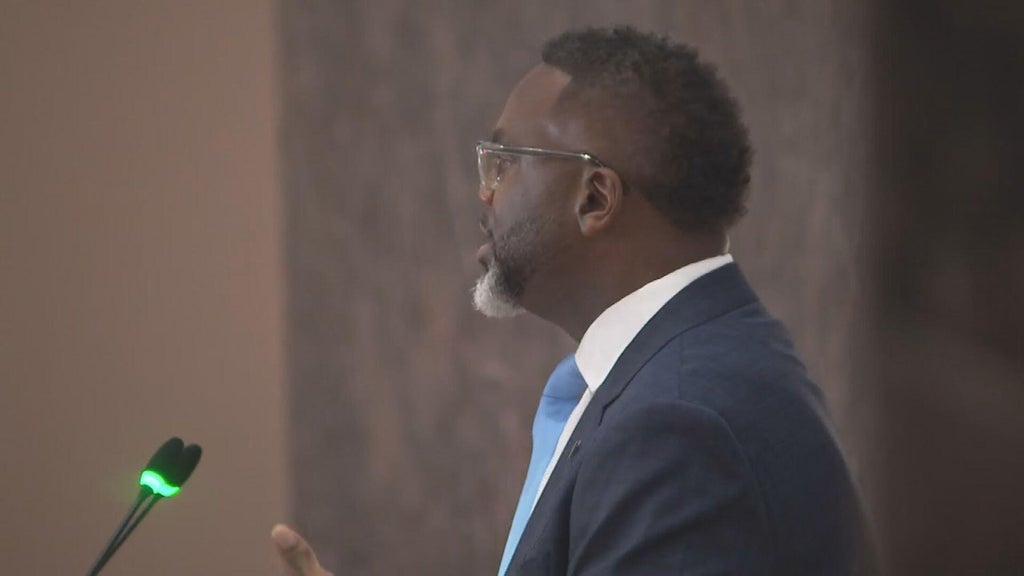
Chicago Mayor Brandon Johnson will take his 2027 budget pitch directly to residents Thursday, as some aldermen reject a key part of his plan.
At noon Thursday, the mayor will host a virtual town hall to explain his plan and hear from residents. But he faces opposition from the same group of 29 aldermen who helped block his corporate head tax last year.
The mayor brought back the proposal for a head tax in the $17.6 billion budget proposal he laid out on Wednesday. It would charge companies with 125 or more full-time employees $25 per worker per month.
Companies whose employees work in parts of Chicago officially designated as Socioeconomically Disadvantaged Areas would qualify for credits to cover the cost of the tax for each employee in those areas.
The mayor said the head tax would generate $101 million to help close the city's $882 million budget gap. Johnson argues large corporations should contribute more.
Critics say the tax would hurt job growth and discourage companies from coming to Chicago. Some alders say the proposal won't pass.
It was disingenuous for the mayor to put the head tax into the budget," Ald. Bill Conway (34th) said after Johnson's budget address. "Twenty-nine of us signed that letter. Clearly that part of is dead on arrival."
But others see an opportunity to bring businesses into more Chicago neighborhoods.
"This is not exodus. This is not a threat to kick corporations out," said Ald. William Hall (6th). "It's an invitation for corporations to come closer to a base of employees."
Hall pointed to the benefit of the mayor's plan for tax relief for companies in underserved neighborhoods.
Speaking on CBS News Chicago on Thursday morning, Mayor Johnson said his priority is funding what residents need.
"We have to challenge corporations and the ultra-wealthy to put more skin in the game. That is hands-down what the people of Chicago are calling for," the mayor said. "And so my fourth budget continues that effort to raise the necessary revenue to improve the quality of life for working people."
Johnson also pushed back on criticism of his relationship with the City Council. He pointed to mental health clinics and affordable housing projects as examples of what he said he and the City Council have accomplished together.
Meanwhile, Johnson also proposed a 15-cent packaging waste tax that would expand the city's existing retail bag tax to include all forms of packaging for carry-out or delivery, bringing in an estimated $9 million.
He also wants sports betting companies to pay a 20% tax, up from 10.25% to bring in $37 million, although the city's sports betting tax is facing a court challenge, with opponents arguing only the state of Illinois is authorized to impose such a tax.
The mayor also plans to increase personal property lease taxes from 15% to 20%. The tax rate for car leases would remain at 15%, while leases for film production equipment would see their tax reduced to 11%. The mayor's office estimates the changes to the personal property lease tax would generate $234 million.
Mayor Johnson's budget proposal received backlash from his opponents in the upcoming election.
Illinois state Comptroller Susana Mendoza said the proposal said the proposal is "another attempt to unload the burden of his mismanagement on Chicago businesses and working families."
U.S. Rep. Mike Quigley (D-Illinois) said the proposal is disingenuous and counterproductive. He added, "It drives jobs away, adds fees and fines that fall on working people, and piles on more debt that our children will be left to pay."
Illinois Secretary of State Alexi Giannoulias called the proposal a "big spending, big taxing, and big borrowing backbreaker for Chicago taxpayers." He said the mayor's proposal is "more of the same from a mayor who, for nearly four years, has failed to bring people together to solve big problems."
Residents can hear from the mayor and ask questions during the virtual town hall at noon Thursday.
The City Council has until Dec. 31 to approve a budget.


